Case
.case() is a Gizmo method that allows you to write complex conditional logic in a way which is easier to read, write, debug and explain than long complex nested if() statements
This expression:
var pr = node.performanceRanking;
if (pr > 8) {
  ("A");
} else if (pr > 6) {
  ("B");
} else if (pr > 4) {
  ("C");
} else {
  ("D");
}
Can be written using .case() as
node.performanceRanking.case(is.gt(8), "A", is.gt(6), "B", is.gt(4), "C", "D")
Fallback option using case
Case operates as pairs. A final entry (unpaired) provides the fallback (else) case.
In the example above, "D" is the else case.
node.grade.case(is.blank, "Grade is missing")
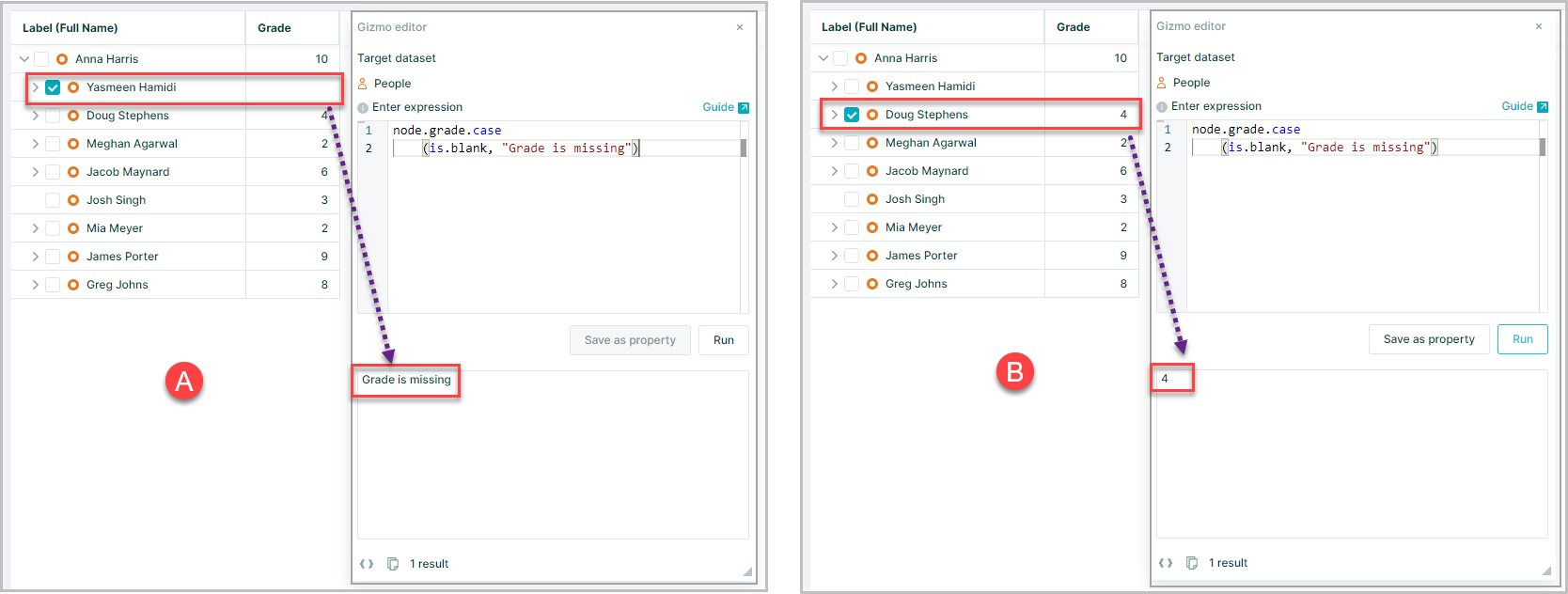
- A. If the "grade" property is blank the string "Grade is missing" is returned
- B. If no
elsecase is provided, the value is passed through in this example the grade is passed through unchanged
Using Case with Is
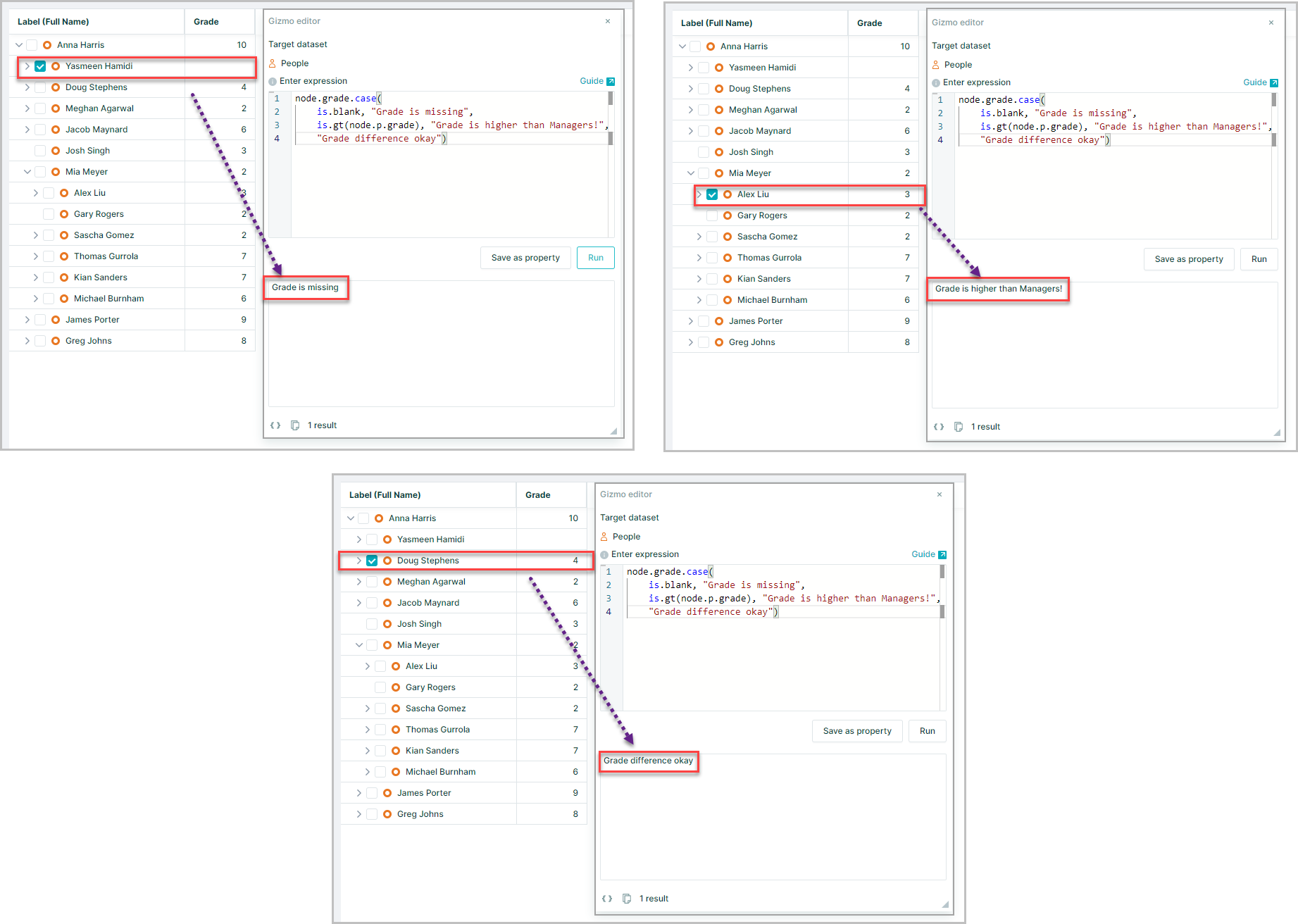
.case() combined with is is powerful, and can be used to express complex cases very succinctly:
node.grade.case(
  is.blank, "Grade is missing",
  is.gt(node.p.grade), "Grade is higher than Managers!",
  "Grade difference okay")
Using case over a collection of nodes
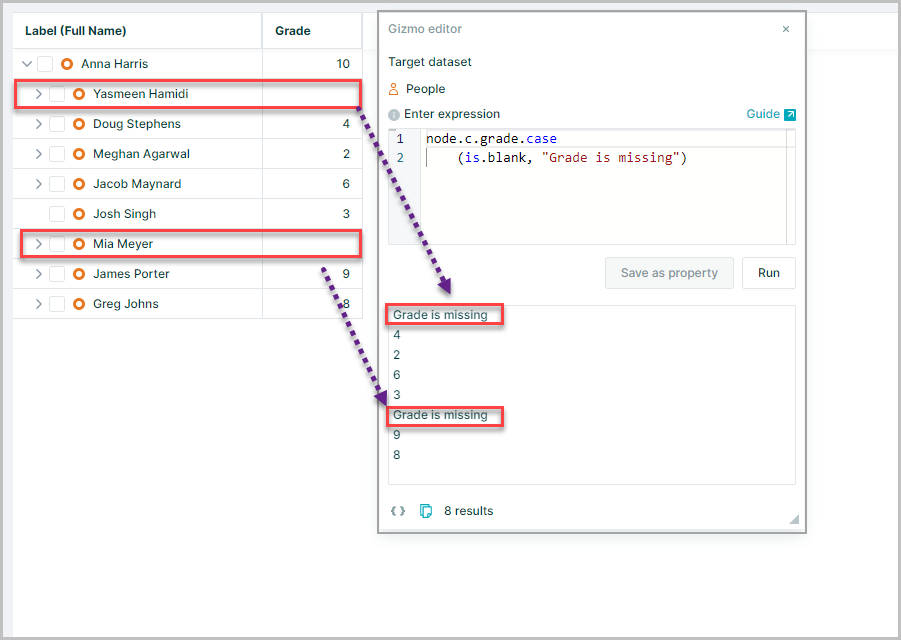
.case() can map over a collection of nodes in this example testing all children of the selected node
node.c.grade.case(is.blank, "Grade is missing")
Using case to test multiple values
Case can also be used in combination with match to test multiple properties at the same time.
node.case(
    is.match({
        department: "Finance",
        location: "UK"}),
    "UK Finance Team",
    is.match({
        department: "Executive",
        grade: is.gt(3)}),
    "Leadership Team")
If none of the conditions are met then the label of the node will be returned